Choosing Your Path After Water Incursion
Dealing with water damage in your home is difficult. Homeowners must figure out whether to try to dry out existing materials or rip everything out and start fresh. Around the Bench Bench and the North End, where older lath-and-plaster or traditional drywall meet fluctuating seasonal humidity, Skyline Restoration Company sees homeowners wrestle with this choice constantly. Skyline Restoration Company gets called out to these sites all the time, and the right answer usually comes down to how long the water sat there and what materials absorbed it.
The Case for Drying in Place
Drying in place means using industrial air movers, dehumidifiers, and sometimes injected heat systems to pull moisture out of structural framing, subfloors, and walls without demolishing them. It is generally the faster route and keeps your home intact.
- Cost: Usually lower upfront because you are paying for equipment runtime and labor rather than full-scale reconstruction.
- Appearance: You preserve your existing finishes, trim, and built-ins, which is a major plus if you live in a historic Boise home with hard-to-match millwork.
- Maintenance: Low immediate maintenance if done right, but you run a risk if hidden moisture gets trapped behind walls.
The main catch here is organic material integrity. If wood framing or subflooring stays damp for more than forty-eight hours, you run right into mold territory. Our local climate gets very dry in the summer, but during those damp Treasure Valley winters and spring thaws, trapped moisture inside a sealed wall cavity takes a long time to evaporate naturally if the mitigation was rushed.
The Case for Tear-Out and Replacement
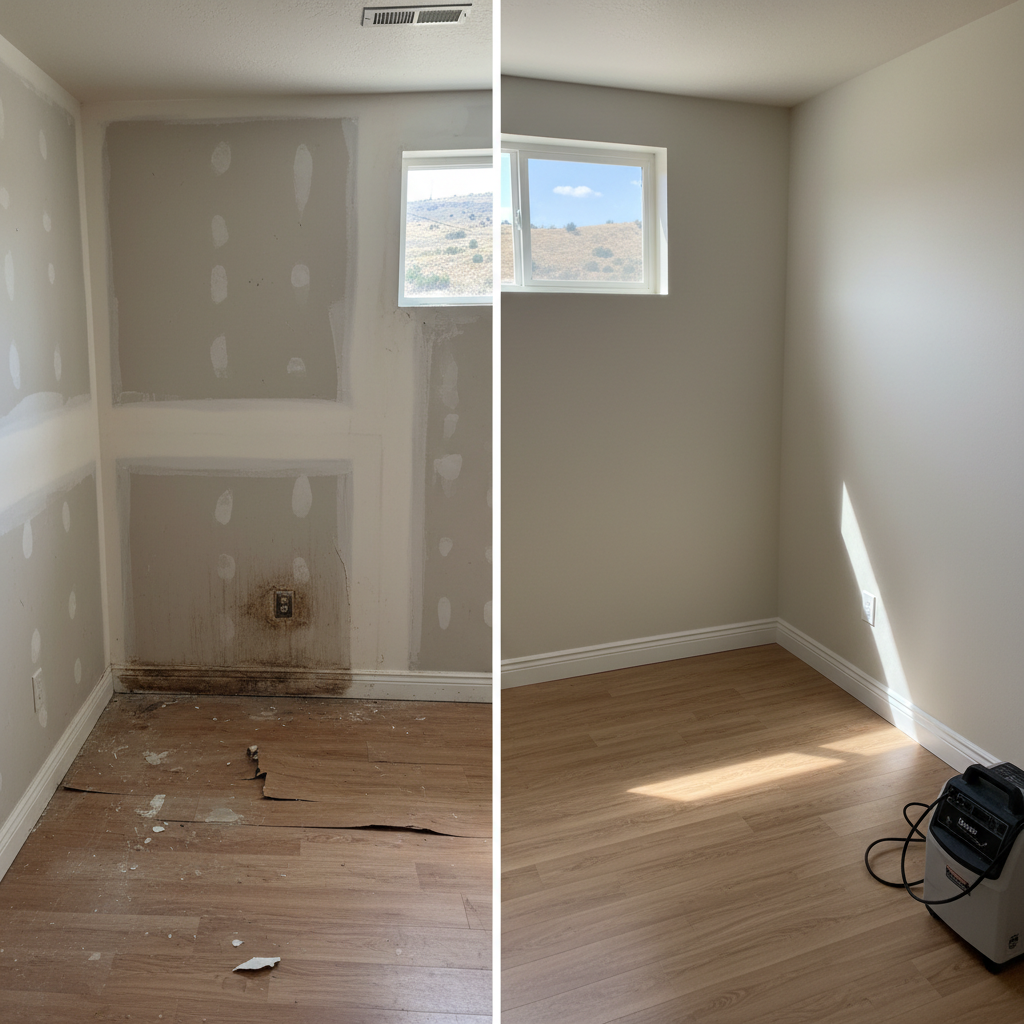
Tear-out and replacement means cutting away saturated drywall, tossing ruined insulation, and pulling up swollen laminate or carpet padding. It looks messy on day one, but it gives you a clean slate.
- Durability: Unmatched. You eliminate the guesswork of whether hidden cavities are truly dry.
- Cost: Higher initial hit because you are paying for both mitigation and a full carpentry and drywall rebuild.
- Appearance: You get brand-new surfaces, though blending new textures with older surrounding walls takes a skilled hand.
When we encounter grey or black water issues—such as a sewer backup or water coming in through dirty exterior soil during a heavy spring storm—drying in place is off the table. You have to cut it out for health and safety reasons.
Making the Call for Idaho Properties
If you catch a clean-water leak quickly—such as a supply line under the kitchen sink that let loose an hour ago—drying in place makes total sense. You save your cabinets and you save your cash. But if water has wicked up standard drywall feet high, or if it sat unnoticed beneath a bathroom vanity for a week, trying to dry it in place is a gamble you are going to lose. Skyline Restoration Company always tells homeowners that spending a little more on selective tear-outs for heavily saturated porous materials is cheap insurance against framing rot and chronic indoor air quality issues down the road.